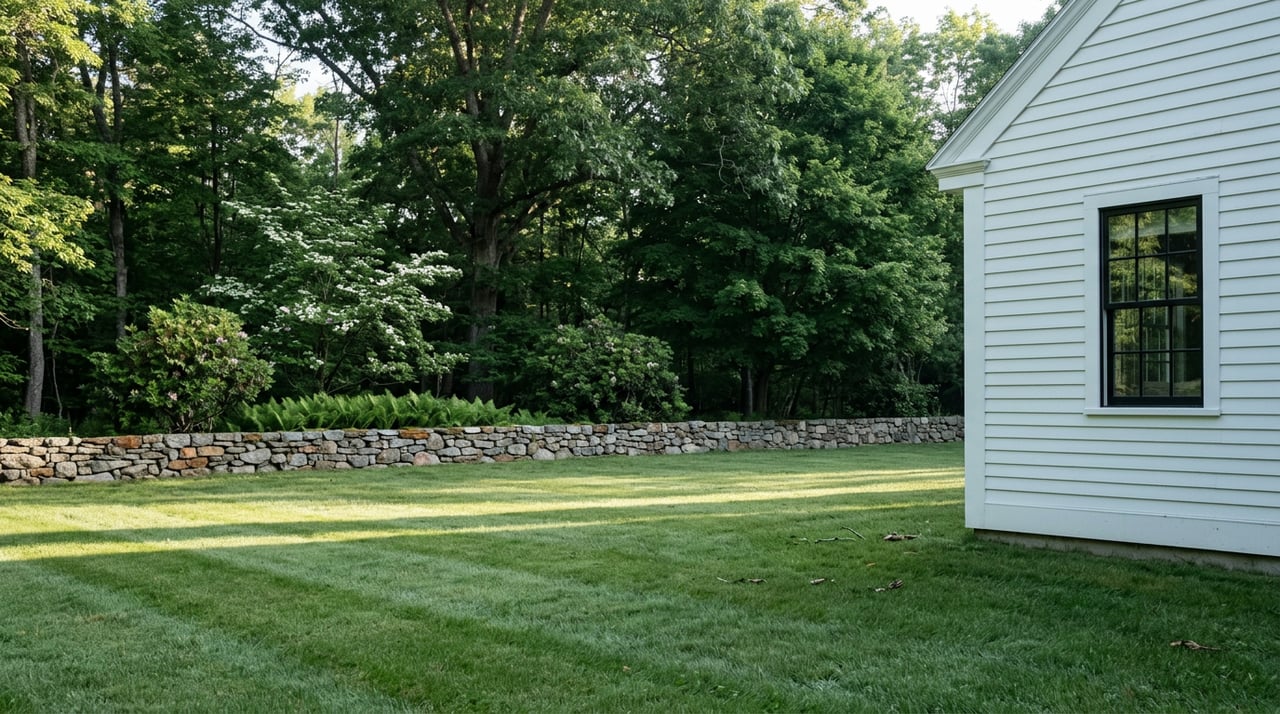
What happens when you fall for a lot in Banksville, agree to a price everyone tells you is fair, and then learn that septic requirements may affect where the pool you were planning can go?
For buyers in Greenwich's northernmost corner, septic capacity is one due-diligence consideration that market data alone cannot capture. A neighborhood profile published earlier this year by a national demographic-data aggregator treats Banksville and neighboring Stanwich as one blended figure, reported north of $4.7 million. It is a number large enough to make a smaller Banksville colonial look like an outlier rather than the norm. It is also a number that tells you almost nothing about what a specific lot will let you do once you own it.
One practical consideration is the septic field and the rules that may affect future plans, which an architect or a health department reviewer can help assess.
What the Blended Median Doesn't Show
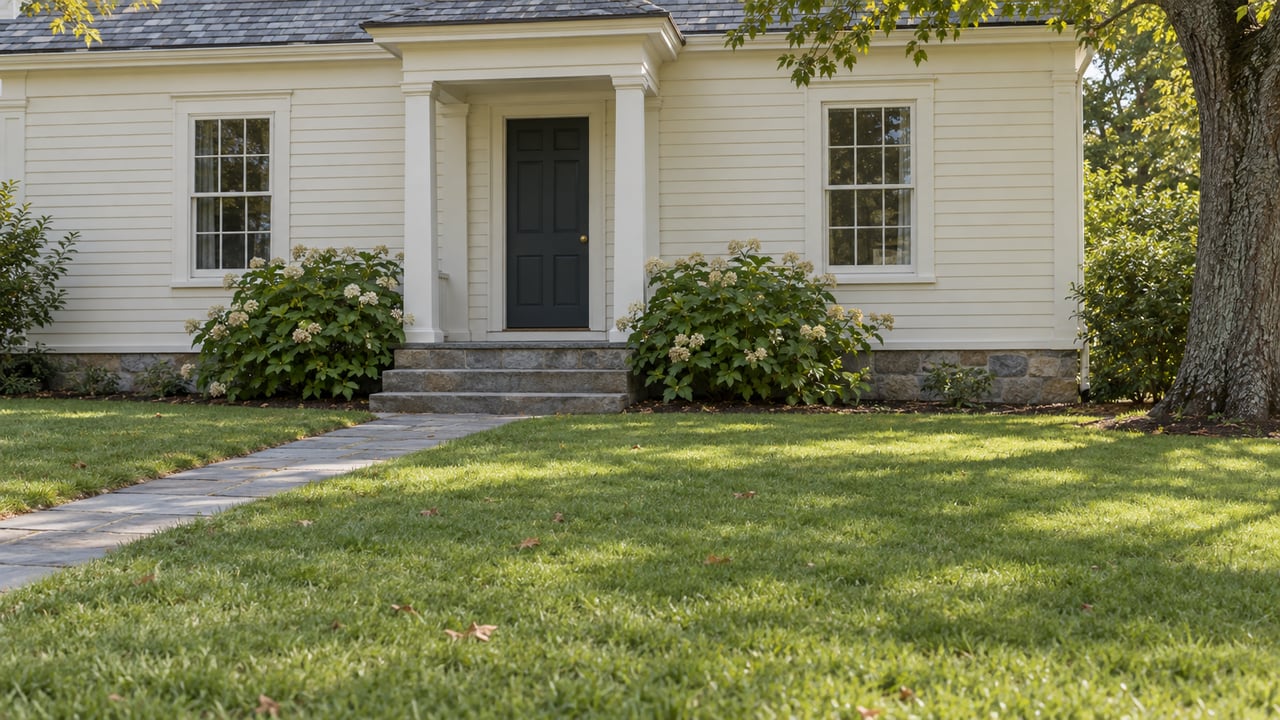
Two recent property examples frame the real Banksville market better than any single median can. A colonial at 4 Banksville Road, 5,216 square feet on a 0.71-acre lot, closed in March 2026 at $2,990,000. Down the road, a newly built modern farmhouse at 18 Scott Road came to market at $1.688 million, three bedrooms and four baths across 2,428 square feet on a 0.43-acre lot near the Connecticut-New York line. The builder, Port Chester-based Rogliano Construction, largely kept the original design from Stamford architect Louis Lefort, with landscaping by Sun Scape Designs principal Angela Monteforte.
Neither of those sits anywhere near $4.7 million. That is the first sign that the blended Banksville-Stanwich figure describes an average of two different markets rather than a single one. Stanwich's larger estate parcels pull the number up. The actual Banksville product most buyers are shopping, a colonial or new-build farmhouse on a half-acre to three-quarter-acre lot, prices well below the headline.
The second sign, and the one that matters more once you are under contract, is what both of those properties have in common: private well and septic, not municipal water and sewer. That single infrastructure fact, present on effectively every Banksville listing we reviewed, is the actual variable driving both price and what you can build.
The Line Item the Median Never Prices In
Connecticut treats existing wells and septic systems differently than most buyers assume. A Connecticut General Assembly report says state law does not require an existing well to be tested as a condition of selling a home. What the law actually requires is narrower: a seller must notify the buyer that information about well testing is available through the Department of Public Health, and failing to provide that notice does not undo the sale. In practice, the requirement that actually reaches the closing table comes from the lender, not the statute. Banks financing a purchase in Banksville will typically insist on a water test before they fund the loan, which means the test happens on nearly every transaction even though no law compels it.
New wells face a stricter standard. The Town of Bethel's guidance says that, since October 1, 2022, Connecticut has required that any newly constructed private or semipublic well be tested for a wider panel, including coliform, nitrate, nitrite, sodium, chloride, iron, manganese, hardness, turbidity, pH, sulfate, color, odor, arsenic, and uranium, with an added lead test if the new well replaces service to an existing structure. That standard did not exist for wells drilled before that date, so a Banksville property built decades ago may never have been screened for arsenic or uranium at all unless a homeowner chose to test voluntarily. Statewide sampling of private bedrock wells by the U.S. Geological Survey found that roughly 4 percent of samples exceeded the EPA standard for arsenic and a similar share exceeded the standard for uranium, a reminder that groundwater quality varies well to well rather than tracking neatly with a neighborhood's price point.
None of this shows up in a median. It shows up in a mortgage timeline, and in the questions a careful buyer's attorney should be asking before a purchase agreement is signed.
How Septic Capacity Can Affect Future Plans
The more consequential rule governs what you can add to a septic-served property after closing, and it comes straight from Greenwich's own Health Department policy on additions to homes on septic systems. The town's framework works like this:
| Planned addition | What the Health Department requires |
|---|---|
| Pool, tennis court, gazebo, or similar feature on usable septic land | A 100% Replacement Area must be set aside before building plans are signed off |
| One-bedroom addition | A 100% Replacement Area is also required |
| Two or more bedrooms | The existing septic system must be physically expanded, in addition to the Replacement Area |
| Any new structure with plumbing | Its own septic system and reserve area, separate from the main house's system |
In plain terms, a lot's septic capacity can affect what you can build later. A buyer picturing a pool house, a guest cottage, or a primary suite addition needs to know before making an offer whether the parcel has enough reserve land to satisfy the Replacement Area requirement. On a tight half-acre lot like the one at 18 Scott Road, that reserve space is a real constraint on future plans, regardless of how much someone is willing to pay for the house itself. On a larger three-quarter-acre-plus parcel, there is more room to work with, which is one reason two Banksville properties at similar price points can offer very different long-term flexibility.
A median price describes what properties cost; septic capacity is one factor that can affect a specific parcel's future uses.
Why This Matters If You're Weighing Banksville Against a Sewer-Connected Neighborhood
For a downsizer comparing a lower-maintenance Greenwich property to a country setting like Banksville, the well and septic question is less about renovation ambitions and more about maintenance cadence: a private system means periodic pumping, inspection, and eventual replacement costs that a municipal-sewer home in a neighborhood like Old Greenwich or Riverside simply does not carry.
For a commuting buyer who wants room to add a home office, a pool, or space for visiting family down the line, the septic capacity question deserves to be raised with a real estate attorney and a septic contractor before the purchase agreement, not after. Ask for the as-built septic plan and Permit to Discharge before you get attached to a specific renovation. Ask whether the lot has documented reserve area, since that document is what the Health Department will actually check against your plans.
The trade Banksville offers is real: more land, more separation from the busier parts of town, and a price point that a blended $4.7 million median obscures rather than reveals. The trade-off is that the infrastructure underneath the lawn, not the number on the listing, can affect how far your plans for that land can go.
Common Questions
Does every home in Banksville run on private well and septic? Not every parcel, but it is the dominant condition across the properties we reviewed, including both a recent resale and new construction. Buyers should confirm water and sewer service for any specific address rather than assuming based on the neighborhood.
If a well passed testing when I bought the house, is that good for the life of the well? No. A passing result at purchase reflects conditions at that moment. Well water quality can change with seasonal groundwater shifts, nearby land use, or aging infrastructure, which is why Connecticut's Department of Public Health recommends routine retesting rather than treating a single past result as permanent.
Who do I ask about septic Replacement Area before making an offer? Start with the property's as-built septic plan, available from the homeowner or the Town's Division of Environmental Services, and loop in a licensed septic contractor alongside your real estate attorney before finalizing any renovation-contingent offer.
If you are weighing Banksville against another corner of Greenwich and want a clearer read on what a specific lot can actually support, New England Land can walk you through the septic and well due diligence alongside the numbers that matter to your decision. Request a private consultation and residence details before your next offer.
This article is general information, not legal, tax or financial advice. Consult a qualified professional about your situation.